
Can 5 Minutes of Meditation Really Make a Difference?
If five minutes a day could help you feel less stressed, focus better, and stop snapping at your kids by 4pm, would you try it?
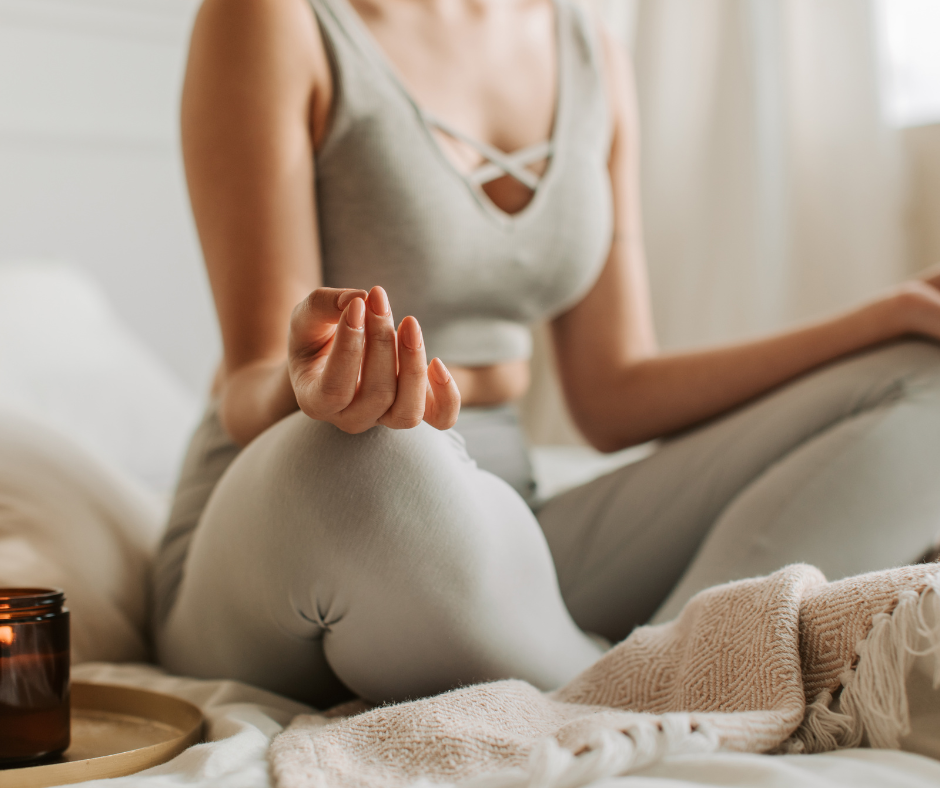
I think most of us misunderstand meditation. We picture someone sitting perfectly still for 30 minutes with an empty mind, and we immediately think: that's not for me, my brain never shuts off.
But here is something that might surpise you... Your mind wandering does not mean you're doing meditation wrong. It's part of the practice.
So then what Is meditation, really? At its simplest, meditation looks like this:
You choose something to pay attention to: your breathing, your feet on the ground, a sound, a prayer, or a meaningful phrase.
Your brain wanders. You start thinking about dinner, the text you forgot to answer, or the 15 things on your to-do list.
You notice.
You bring your attention back.
That's meditation.
Think of it like strength training for your attention. You don't build strength with one perfect rep. You build it rep after rep after rep, and meditation works the same way.
Can Just 5 Minutes Help? Here's What the Research Says…
This is where it gets interesting. Researchers have studied meditation sessions lasting only a few minutes, not an hour, not even 30 minutes. Sometimes just five.
5 Minutes and Stress
In one study, 60 people with advanced cancer receiving comfort-focused care were split into two groups. One practiced five minutes of mindful breathing. The other simply listened to a story for five minutes. The meditation group saw greater improvement in stress, blood pressure, heart rate, and breathing rate. Their bodies shifted into a calmer state after only a few minutes.
That doesn't mean five minutes permanently fixes high blood pressure. It shows that a short period of intentional quiet can change what's happening in your body in the moment, which matters if your normal response to stress is to stay stuck in high gear all day.
What Happens If You Practice for a Month?
One study compared four different five-minute daily practices for a month: mindfulness meditation, slow breathing with long exhales, box breathing, and a faster breathing practice. All four groups saw improvements in mood and anxiety. Interestingly, the breathing groups, especially the slow-exhale practice, showed slightly greater gains in mood than the meditation group did.
Read the study in Cell Reports Medicine
Seeing that it takes only five minutes can take a weight off our shoulders because the biggest barrier most of us have isn't motivation. It's time. Five minutes still takes intention, but it doesn't require rebuilding your whole schedule!
Meditation May Help Train Focus (And we all need a bit more of this)
Another study to note followed seventh graders during the school year. Some did five minutes of mindfulness before English class; others did a regular academic warm-up. By year's end, the mindfulness group read an average of 4.4 more words correctly during a timed reading exercise than the comparison group. Unfortunately, that doesn't mean meditation makes you smarter. But it may help strengthen something we all need: the ability to bring our attention back when it gets pulled away. Think about how much that matters at work, in conversations, while driving, or even while trying to listen to your kids or husband without mentally running through your to-do list.
What About Longer-Term Stress?
A larger study followed 662 school employees using a smartphone-based meditation and well-being program (the Healthy Minds Program) for four weeks. Compared with people who hadn't started yet, the meditation group had meaningful improvements in emotional distress, repetitive stressful thinking, feeling socially connected, and overall well-being. Those improvements were still measurable three months later. That's probably the most practical takeaway here. Meditation isn't about escaping stress. It may help you get better at not being carried away by every stressful thought that shows up!
You Do Not Have to Sit Still
This is my favorite part. Meditation doesn't have to mean sitting cross-legged on the floor with your eyes closed. You can practice it while walking, folding laundry, washing dishes, showering, or doing easy cardio. The point isn't the position your body is in. It's what you do with your attention. If you're walking, pay attention to the feeling of your feet touching the ground. Then your brain takes off, you start thinking about tomorrow or replaying a conversation. You notice. You come back to your feet. That's a meditation rep.
For Me, This Includes Prayer
Intentional quiet can absolutely include prayer and time with God. At its core, this is about practicing the ability to direct your attention, notice when your mind wanders, and bring it back instead of letting every thought carry you away. That can happen while focusing on your breathing, while walking, or while sitting quietly in prayer.
How I got started… The Miracle Morning

Many years ago, my mornings were chaos. I'd wake up already behind and feeling overwhelmed before my feet even hit the floor. What changed things for me was Hal Elrod's book The Miracle Morning and its S.A.V.E.R.S. routine: Silence, Affirmations, Visualization, Exercise, Reading, Scribing.
That first S, Silence, is where I started. Some mornings that's meditation. Some mornings it's prayer. Some mornings it's just sitting still with my hot cup of water (Don’t knock it until you try it) before the house wakes up. It didn't require a perfect routine or a full hour. It just required showing up for five minutes before everything else pulled my attention away.
That's really the throughline of everything in this post. You don't need the ideal setup. You need a small, repeatable rep.
How to Start: A 5-Minute Meditation for Beginners
Try five minutes a day. If that sounds like too much, start with two.
Pick something you're confident you can actually do.
Choose your focus: your breath, your feet while you walk, a sound, a prayer, a Scripture, or the feeling of your hands while washing dishes.
Let your goal be simple: not "I'm going to stop thinking," but "I'm going to notice when my mind wanders and practice coming back."
That's the skill. That's the rep. Over time, those tiny reps may help you become a little better at choosing where your attention goes, instead of letting every thought, worry, and stressor choose for you.
Frequently Asked Questions
Do I have to clear my mind to meditate? No. Your mind will wander. The practice is noticing it and bringing your attention back.
Is 5 minutes of meditation really enough to reduce stress? Five minutes has been enough to produce measurable short-term changes in several studies, including lower stress and improved mood. You don't have to start with a long session for it to count.
Do I have to meditate every day for it to work? No one does anything perfectly. Consistency matters more than perfection. Start with something you can realistically repeat.
Does meditation have to involve breathing? No. You can focus on a sound, movement, body sensation, word, prayer, Scripture, or visual object instead. I do think that breathworth is great though! If you need a place to start, the free app, iBreathe is a good choice!
Can walking count as meditation? Yes. Walking becomes an intentional attention practice when you choose something to focus on, like the feeling of your feet, and keep returning your attention to it and do it without listening to something!
Is meditation the only way to reduce stress? No. Exercise, breathing practices, time outdoors, prayer, meaningful relationships, music, and other calming activities can help too.